
Institutional Overview & CHSI Profile: Hubei University of Chinese Medicine (湖北中医药大学)
Founded in 1958, Hubei University of Chinese Medicine is a renowned medical institution accredited by the Ministry of Education located in Wuhan, Hubei Province, operating under the supervisory governance of the Hubei Provincial Department of Education. Celebrated for disciplinary rigor and pioneering research, the university serves as an intellectual cornerstone for domestic academic development and global educational exchange.
The institution encompasses 26 undergraduate degree programs. Standout accredited majors include Insurance, Sports Rehabilitation, English, Business English, Biotechnology, Applied Psychology, along with extensive multidisciplinary offerings.
International candidates are eligible to compete for prestigious scholarship tracks including the Chinese Government Scholarship (CSC Type-B). For 2026/2027 admissions, academic evaluation emphasizes verified performance in standardized credentials alongside disciplinary aptitude, positioning Hubei University of Chinese Medicine as a top destination for international scholars. Through its dedicated International Student Office, the university administers global scholar admissions, visa sponsorship, and cultural integration initiatives.
- Official MOE Institution Code (教育部院校代码):
10507(Supervised by Hubei Provincial Department of Education • CHSI Student Satisfaction Rating: 3.4 / 5.0) - Program Classification: Traditional Chinese Medicine (TCM), Acupuncture & Integrative Medicine (Regulatory Notice: Hubei University of Chinese Medicine is a specialized TCM/Pharmaceutical institution and is not part of the 45 MOE-approved English-medium Allopathic Clinical Medicine [MBBS] roster.)
- CHSI Accredited Flagship Majors: Insurance, Sports Rehabilitation, English, Business English, Biotechnology, Applied Psychology, Medical Information Engineering, Internet of Things (IoT) Engineering, Pharmaceutical Engineering, Food Quality and Safety
- Registered Campus Address: Wuhan, Hubei Province, China (地址:湖北省武汉市洪山区黄家湖西路16号 邮编:430065)
Important Licensing & Program Notice for International Medical Applicants: Hubei University of Chinese Medicine (湖北中医药大学) specializes in Traditional Chinese Medicine (TCM), Acupuncture & Integrative Medicine. It is not one of the 45 Chinese universities gazetted by the Ministry of Education (MOE) for English-medium Allopathic Clinical Medicine (MBBS). International students who intend to sit for allopathic Western medical licensing examinations such as India's NMC FMGE/NExT or Pakistan's PMDC NRE should apply to one of the 45 MOE-approved English MBBS universities. Applicants pursuing accredited degrees in Traditional Chinese Medicine (BCM), Acupuncture, Chinese Materia Medica, or Pharmaceutical Sciences will find Hubei University of Chinese Medicine among China's established public institutions in this field.Academic Faculties, Specialized Training & Affiliated Hospitals
- Core Disciplines: Traditional Chinese Medicine (TCM), Acupuncture & Moxibustion, Chinese Materia Medica, Integrative Medicine & Rehabilitation.
- Clinical & Laboratory Training: Supported by specialized teaching laboratories and affiliated provincial TCM / specialized teaching hospitals in Wuhan, Hubei (reference inpatient network: 5,000+ Beds across approximately 3 affiliated hospitals).
- Language & Instruction Tracks: Degree programs are offered in Chinese-medium (typically requiring HSK Level 4 or 5) as well as selected English or bilingual tracks depending on the annual international招生简章 (admissions prospectus).
2026/2027 Reference Tuition & Living Cost Estimate
Data & Fee Verification Notice (Last Updated: November 11, 2026): Five-digit institutional codes (10507) are official Ministry of Education codes, andWDOMSreflects the World Directory of Medical Schools listing. Because neither CHSI nor WDOMS publishes international MBBS fee schedules, tuition and dormitory figures below are compiled from university international admissions prospectuses as reference benchmarks (仅供参考)—always confirm exact billing in Hubei University of Chinese Medicine's current annual prospectus.
| Expense Category | Reference Cost (RMB) | Estimated USD Equivalent | Verification & Billing Notes |
|---|---|---|---|
| Annual Tuition (Est.) | ~¥24,000 RMB / yr | ~$3,380 USD / yr | Reference rate (~24,000 RMB/yr); actual billing follows the university's official annual international prospectus |
| International Student Dormitory (Est.) | ~¥4,500 RMB / yr | ~$634 USD / yr | Varies by double/single room tier & campus building |
| Statutory Medical Insurance | ~¥800 RMB / yr | ~$113 USD / yr | Mandatory comprehensive medical insurance in China |
| Residence Permit & Physical Check | ~¥800 RMB / yr | ~$113 USD / yr | Municipal Exit-Entry Administration & arrival health check |
| Food & Local Living Estimate | ~¥16,000 RMB / yr | ~$2,254 USD / yr | Campus canteens & daily transit in Wuhan |
| Estimated Year 1 Total Budget | ~¥46,100 RMB | ~$6,493 USD | Combined first-year reference budget (excluding flights) |
Campus Living, Dining & Urban Environment in Wuhan
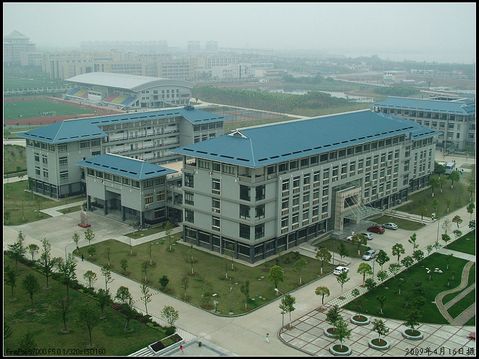
Student accommodation at Hubei University of Chinese Medicine features on-campus residence halls managed by the university residential affairs division. On-campus accommodation fees are administered in accordance with provincial education and price bureau standards.
Campus dining facilities include on-campus student dining halls. In addition to residential and dining services, the campus provides academic libraries, sports facilities, and student activity centers.
Wuhan, Hubei Province is the capital of Hubei Province and Central China's largest higher education, medical, and high-speed rail hub. Connected via China's national high-speed railway network, municipal transit lines, and regional aviation corridors, Wuhan provides convenient domestic and international mobility for visiting scholars and degree students.
International students studying in Wuhan benefit from comprehensive urban infrastructure, cashless mobile payment networks (Alipay and WeChat Pay), public libraries, and healthcare facilities. In Wuhan, winter temperatures do not use northern municipal central heating; campus dormitories and classrooms rely on wall-mounted reverse-cycle air conditioning units for winter heating and summer cooling.